Efficient waste collection is essential for public health, environmental protection, and well-managed communities. In South Africa, municipalities and private contractors must collect refuse from busy city centres, suburbs, informal settlements, industrial sites, shopping centres, and remote communities. Long routes, difficult road conditions, limited budgets, and rising waste volumes can place substantial pressure on collection fleets.
Waste compactor trucks help operators address these challenges by compressing refuse inside a purpose-built body. This reduces empty space between materials and allows the truck to collect more waste volume before travelling to a transfer station or landfill.
Fewer disposal trips can improve route productivity, reduce fuel use, and make better use of crews and vehicles. The truck must still remain within its legal mass and axle-load limits because compaction reduces volume, not weight.
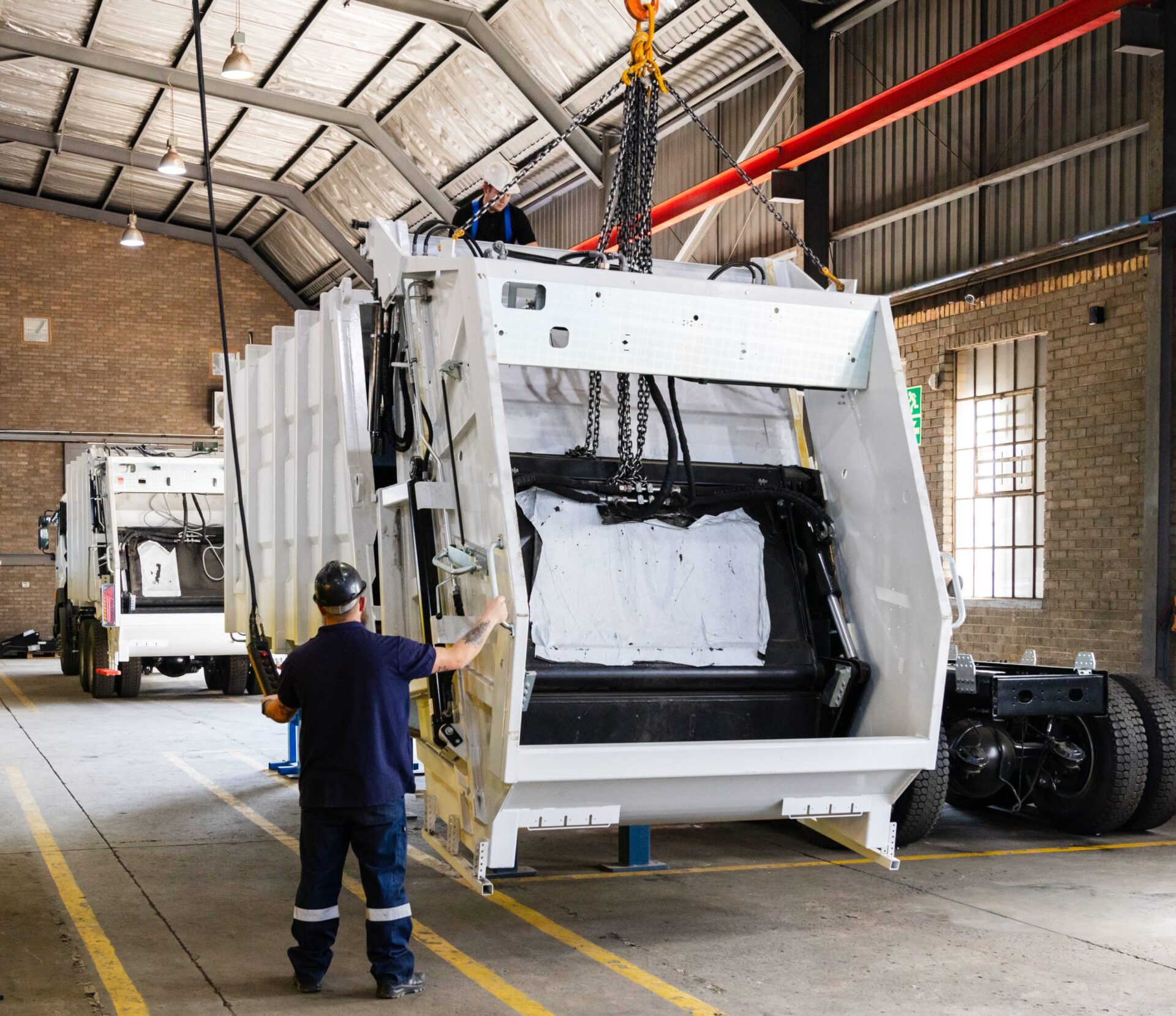
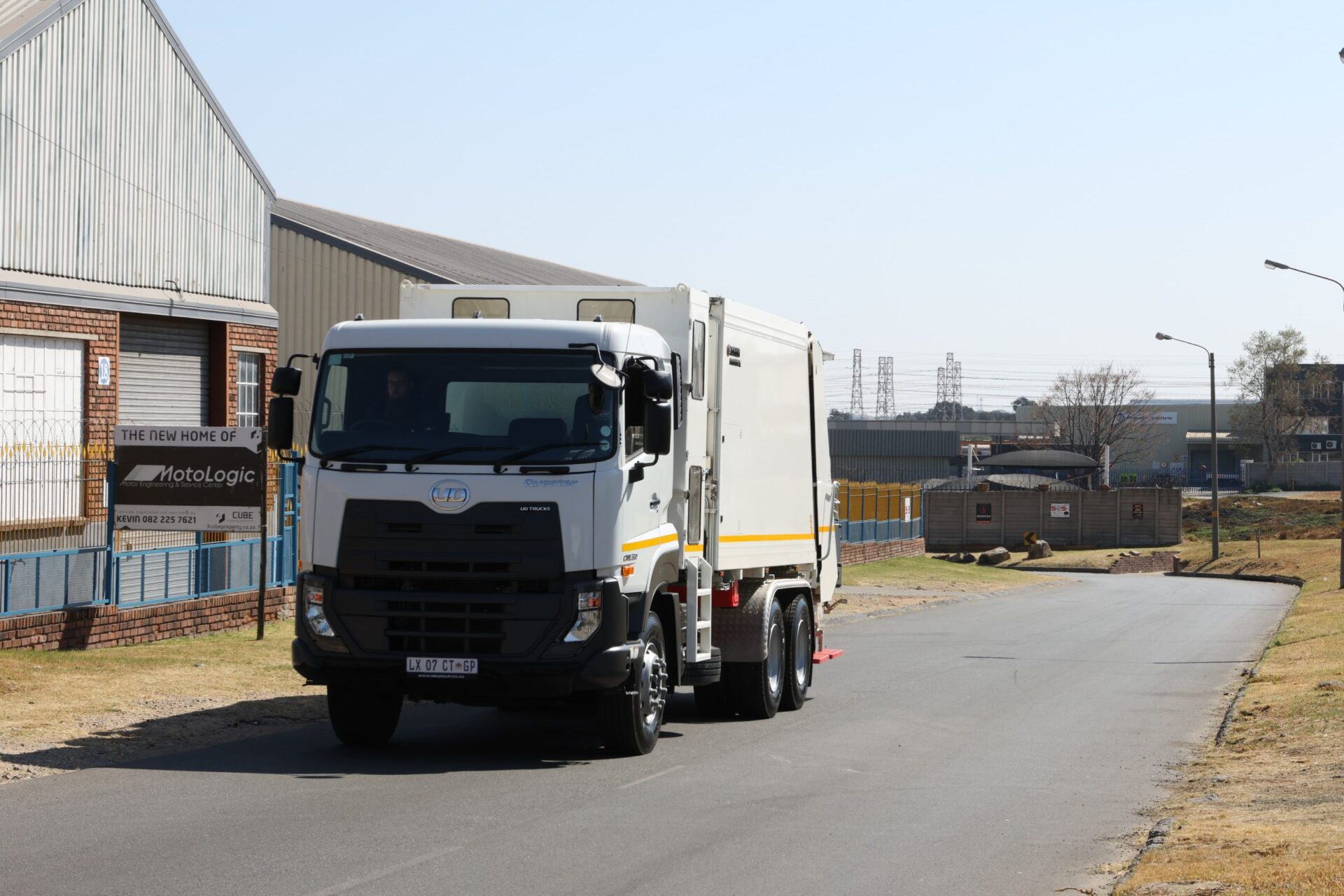
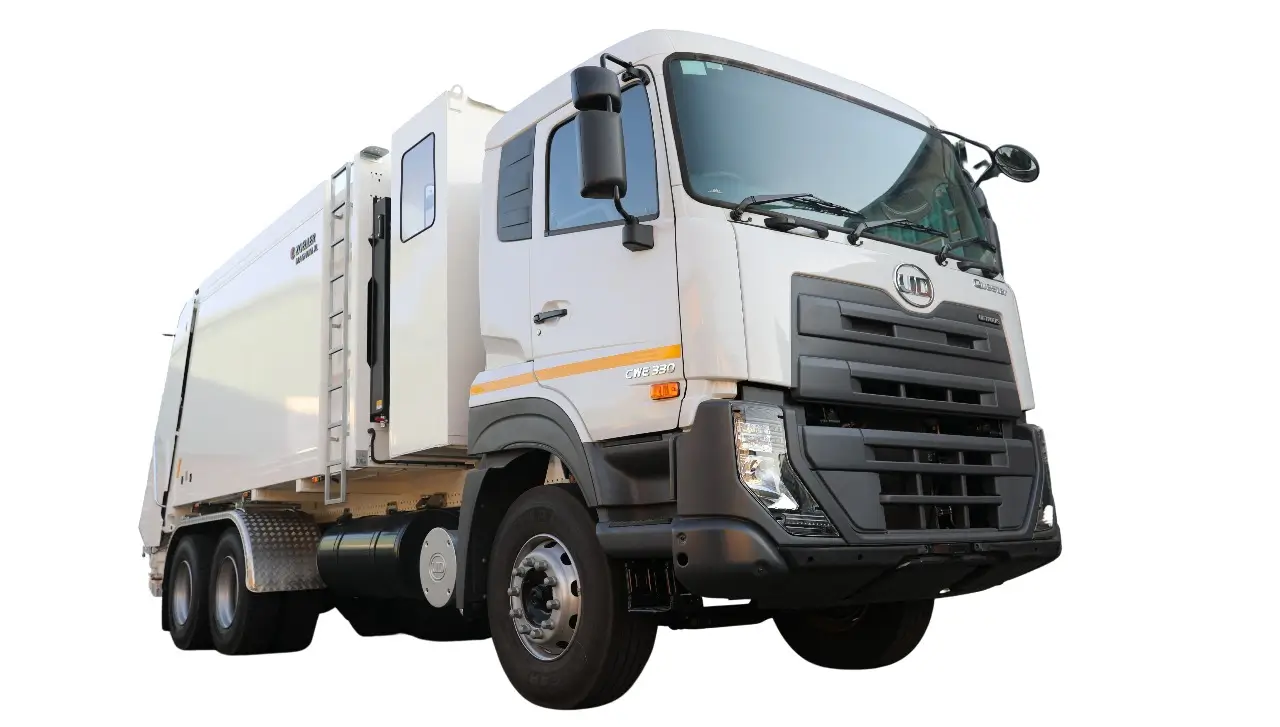
Zoeller Waste Trucks provides high-performance waste collection vehicles for municipal, commercial, and industrial applications. Our locally manufactured Magnum XL waste compactor is designed to support demanding South African and Southern African operations.
How Waste Compactor Trucks Work
A waste compactor truck combines a vehicle chassis with a specialised refuse body, loading area, hydraulic system, compaction mechanism, and discharge system.
Waste is placed in the loading area manually or through compatible bin-lifting equipment. The compaction mechanism moves the material into the main body and compresses it. This process repeats as the crew travels along the collection route.
At the disposal facility, the compacted load is discharged according to the vehicle’s operating system. The truck can then return to its route or depot.
Rear-loading compactors are widely used because they can support various municipal and commercial collection requirements. Correct bin compatibility, safe loading procedures, operator training, and regular maintenance are essential for reliable performance.
Increased Capacity on Every Route
The primary efficiency advantage is improved use of the available body volume.
Loose refuse contains air spaces, particularly when it includes bags, cardboard, packaging, and other light materials. Compaction reduces these spaces, allowing the vehicle to collect from more properties before its body reaches capacity.
This benefit is particularly valuable when disposal facilities are far from collection areas. Every unnecessary landfill trip removes a truck and crew from productive collection work. Reducing these journeys can help operators complete more of the planned route during each shift.
Actual capacity depends on waste density. Bulky packaging behaves differently from wet or dense refuse. Route planning must consider both volume and weight to avoid overloading the vehicle.
Fewer Disposal Trips
Travelling between a collection area and a landfill or transfer station consumes fuel, labour hours, tyres, and vehicle life. Trucks may also lose productive time in traffic or disposal-site queues.
By using body space efficiently, a correctly specified compactor can reduce the frequency of these trips. Potential benefits include:
- Lower fuel consumption per unit of waste collected
- More productive crew hours
- Reduced travel time and vehicle wear
- Fewer interruptions to scheduled routes
- Improved daily route completion
- Better use of the available fleet
These advantages can be significant for municipalities covering large geographic areas and contractors serving customers across several commercial or industrial zones.
Faster and More Consistent Loading
Purpose-built loading and compaction systems create a repeatable collection process. Where compatible lifting equipment is used, crews don’t have to tip heavy bins manually. This can improve loading speed and reduce physical strain.
Consistent operating cycles also support better planning. Fleet managers can estimate stop times, compaction cycles, travel requirements, and disposal needs more accurately when vehicles and bins are standardised.
Equipment doesn’t remove the need for safe procedures. Crews must check the loading area, communicate with the driver, remain clear of moving mechanisms, and stop work when an unsafe condition develops.
Interlocks, guards, cameras, alarms, emergency stops, and other safety equipment must be maintained and must never be bypassed.
Cleaner Waste Collection
Open or unsuitable collection vehicles may allow litter, dust, or refuse to escape during transport. A purpose-built compactor body offers improved containment, helping operators maintain cleaner routes and collection areas.
Effective containment can:
- Reduce windblown litter
- Prevent loose waste from falling onto roads
- Limit exposure to unpleasant material
- Improve the professional appearance of the service
- Reduce secondary clean-up requirements
- Support cleaner streets and business premises
Seals, tailgates, drainage points, and body components must remain in good condition. Leachate and wet waste require careful management to prevent leakage.
Hazardous, medical, chemical, or otherwise regulated waste may require specialised vehicles, containers, permits, and procedures. A standard municipal compactor should only be used for suitable waste streams.
Supporting South African Municipalities
South African municipalities face growing service demands, constrained budgets, fleet shortages, and long travel distances to disposal facilities. Collection vehicles may operate on highways, urban streets, unpaved roads, steep gradients, and narrow residential routes during the same working week.
A dependable compactor can help a municipality collect greater volumes with available resources. It may reduce disposal journeys or allow an existing fleet to serve more households.
The correct specification must account for route conditions, road width, turning space, terrain, bridge limits, overhead clearance, container types, and access to maintenance support. A large-capacity vehicle isn’t automatically appropriate for every route.
The Magnum XL is available in approximately 19- to 23-cubic-metre capacities and is designed to address a broad range of collection and disposal requirements. The final body and chassis combination should be selected according to legal payload, waste density, and operating conditions.
Benefits for Commercial and Industrial Collection
Private contractors use waste compactor trucks to serve factories, warehouses, retail centres, residential estates, hospitality businesses, and other commercial premises.
Reliable collection helps clients avoid overflowing bins, odours, pest activity, restricted access, and reputational concerns. Contractors can also use consistent schedules to serve more collection points efficiently.
Industrial waste can vary greatly in density and composition. Operators must understand what they are collecting and prevent unsuitable material from entering the compactor. Large metal objects, hot ash, pressurised containers, hazardous substances, and certain construction materials can damage equipment or create serious safety risks.
Better Fleet Utilisation
Collection efficiency is not determined by body capacity alone. Fleet availability, route planning, crew performance, bin compatibility, workshop support, and disposal-site turnaround all affect productivity.
A vehicle that spends excessive time awaiting repairs cannot deliver operational value, regardless of its theoretical capacity. Preventative maintenance is therefore essential.
Our waste collection trucks are manufactured with robust methods, quality materials, and corrosion-protection measures suited to demanding operations. We also offer service and maintenance support to help operators manage availability and long-term vehicle performance.
Planned servicing can reduce avoidable breakdowns, improve safety, and make maintenance costs more predictable.
Selecting the Correct Waste Compactor Truck
A truck should be selected according to actual operating data rather than body size alone.
- Waste type and density: Domestic refuse, packaging, food waste, and industrial material have different compaction characteristics. A truck collecting dense waste may reach its legal weight limit before its body appears full.
- Daily collection volume: Operators should estimate the volume and mass collected on each route, including changes during weekends, holidays, and seasonal peaks.
- Disposal distance: Long landfill trips increase the value of efficient loads, but gross vehicle mass, axle limits, and legal payload requirements must always be observed.
- Road conditions: Narrow roads, tight corners, steep gradients, poor surfaces, low branches, and congested loading areas can influence chassis size, body configuration, manoeuvrability, and ground clearance.
- Container compatibility: Lifting equipment must suit the bins used along the route. Standardised containers can reduce delays, prevent damage, and create more predictable collection cycles.
- Chassis and body integration: Body volume, payload, axle ratings, wheelbase, power, braking, and suspension must work as a complete system. Professional integration is essential for safety and performance.
- Maintenance support: Parts availability, technical knowledge, service intervals, and workshop capacity affect lifetime cost and fleet reliability.
Why Preventative Maintenance Matters
Waste collection creates a demanding duty cycle. Vehicles operate in stop-start traffic, perform repeated hydraulic movements, carry changing loads, and work in dust, heat, rain, and corrosive environments.
Daily inspections should cover hydraulic leaks, tyres, lights, alarms, emergency stops, lifting equipment, fluid levels, body condition, and tailgate security.
Planned maintenance may include:
- Inspection of hydraulic pumps, cylinders, hoses, and fittings
- Lubrication of moving components
- Bin-lifter and compaction-system checks
- Examination of body structures, seals, and tailgates
- Corrosion assessment and treatment
- Electrical and safety-system testing
- Cleaning and sanitation
- Chassis servicing according to manufacturer requirements
Maintenance records help managers identify recurring faults and schedule component replacement before a failure interrupts collection.
Operator Training and Safety
Compactor mechanisms exert considerable force. Only trained and authorised personnel should operate the equipment.
Crews must understand exclusion zones, loading procedures, communication signals, emergency-stop locations, reversing controls, and how to respond to unsuitable waste. Nobody should enter the loading area or attempt to clear a blockage while the system is energised.
Reversing also presents a serious risk. Cameras, mirrors, audible alarms, spotters, and route planning can improve visibility, but the driver must remain alert to pedestrians, cyclists, children, animals, and roadside obstacles.
Safe operating practices should be reinforced through supervision and refresher training. Route targets must never take priority over worker or public safety.
Improving Performance Through Route Planning
An efficient compactor can still underperform on a poorly designed route. Operators should assess collection-point sequence, traffic patterns, expected waste volume, disposal distance, vehicle capacity, and turnaround time.
Accurate route records and telematics can identify excessive idling, repeated detours, unnecessary travel, and locations with unusually long collection times. Historical load data can show whether a route should be divided, combined, or assigned to another vehicle.
Schedules may require adjustment during holidays, seasonal tourism, industrial shutdowns, or periods of higher household waste generation.
The objective is to match vehicle capacity to the route so that trucks don’t return with unused space or reach their payload limit before completing collection.
Buying, Leasing, or Renting a Compactor
Purchasing may suit organisations with stable, long-term collection needs and established fleet-management capacity. Leasing can offer predictable budgeting, while rental may be useful for short-term contracts, seasonal demand, emergency fleet cover, or equipment evaluation.
Zoeller Waste Trucks offers compactors for purchase, lease, and rental, subject to availability and agreed requirements.
Operators should compare the total cost of ownership rather than the purchase price alone. Costs may include finance, insurance, fuel, tyres, licensing, maintenance, downtime, parts, and eventual resale value.
Local Manufacturing and Support
Waste trucks operating in Southern Africa must cope with local road conditions, climates, service requirements, and supply realities. Access to replacement components, technical knowledge, and maintenance support can be as important as the original specification.
The Magnum XL is locally manufactured in South Africa in capacities suited to many municipal and commercial applications. Local production supports closer consultation around configuration, operating requirements, and after-sales assistance.
Our team can help clients explore product specifications, rental and leasing options, service contracts, and technical support.
Frequently Asked Questions
What does a waste compactor truck do?
It collects refuse and compresses it inside a purpose-built body. Compaction reduces empty space between materials, allowing the truck to carry more waste volume before unloading.
Can a compactor exceed its legal payload?
No. Compaction improves volume utilisation, but the truck must remain within its legal gross vehicle mass, axle limits, and permitted payload.
What waste can be collected?
General municipal and suitable commercial waste are common. Hazardous, medical, chemical, hot, pressurised, or unsuitable bulky materials may require specialised handling.
How often should a compactor truck be serviced?
Servicing should follow the body and chassis manufacturers’ schedules, duty cycle, operating hours, and working conditions. Daily checks must supplement planned maintenance.
Is the Magnum XL manufactured locally?
Yes. The Magnum XL is manufactured in South Africa and is available in approximately 19- to 23-cubic-metre configurations.
Can businesses rent a waste compactor truck?
Yes. Zoeller Waste Trucks offers flexible rental options for short- and longer-term requirements, subject to availability and contractual terms.
How do I select the correct capacity?
Consider waste density, daily volume, route length, disposal distance, road conditions, legal payload, bin types, and chassis suitability.
Why are service contracts valuable?
They support preventative maintenance, help detect wear early, and can improve fleet availability while making maintenance requirements more predictable.
Improve Collection Efficiency with Zoeller Waste Trucks
Waste compactor trucks improve productivity by increasing usable collection capacity, reducing disposal trips, supporting consistent loading, containing refuse, and helping fleets complete more work with available resources.
Achieving these benefits requires the correct vehicle, compatible containers, trained crews, safe procedures, efficient routes, and preventative maintenance.
Zoeller Waste Trucks provides locally manufactured Magnum XL compactors, flexible purchase, rental, and leasing options, and dependable service support for demanding collection operations.
If you want to know more about our offers, please contact us to chat with a representative.
Alternatively, browse our website to find the right solution for your needs.