Waste trucks are the backbone of modern waste management. Whether they are collecting household refuse in suburbs, servicing commercial bins at shopping centres, supporting industrial sites, or helping municipalities keep public spaces clean, the right truck makes an immediate difference to productivity, safety, route efficiency, and long-term operating costs.
In South Africa, waste collection comes with its own set of challenges. Routes can range from dense urban streets in Johannesburg, Cape Town, Durban, Pretoria, and Gqeberha to rural or semi-rural areas where distance, road conditions, vehicle reliability, and maintenance access matter just as much as payload. Operators also need to manage rising fuel costs, tighter municipal budgets, increased pressure on service delivery, and the daily demand for dependable vehicles that can perform under tough working conditions.
That is why understanding the different types of waste trucks is so important. Not every waste truck is designed for the same job. Some are built for compacting household refuse. Others are designed for bulky waste, construction rubble, industrial waste, recyclables, organic material, or large commercial containers. Choosing the wrong truck can lead to unnecessary downtime, poor load efficiency, higher maintenance costs, route delays, and operational frustration.
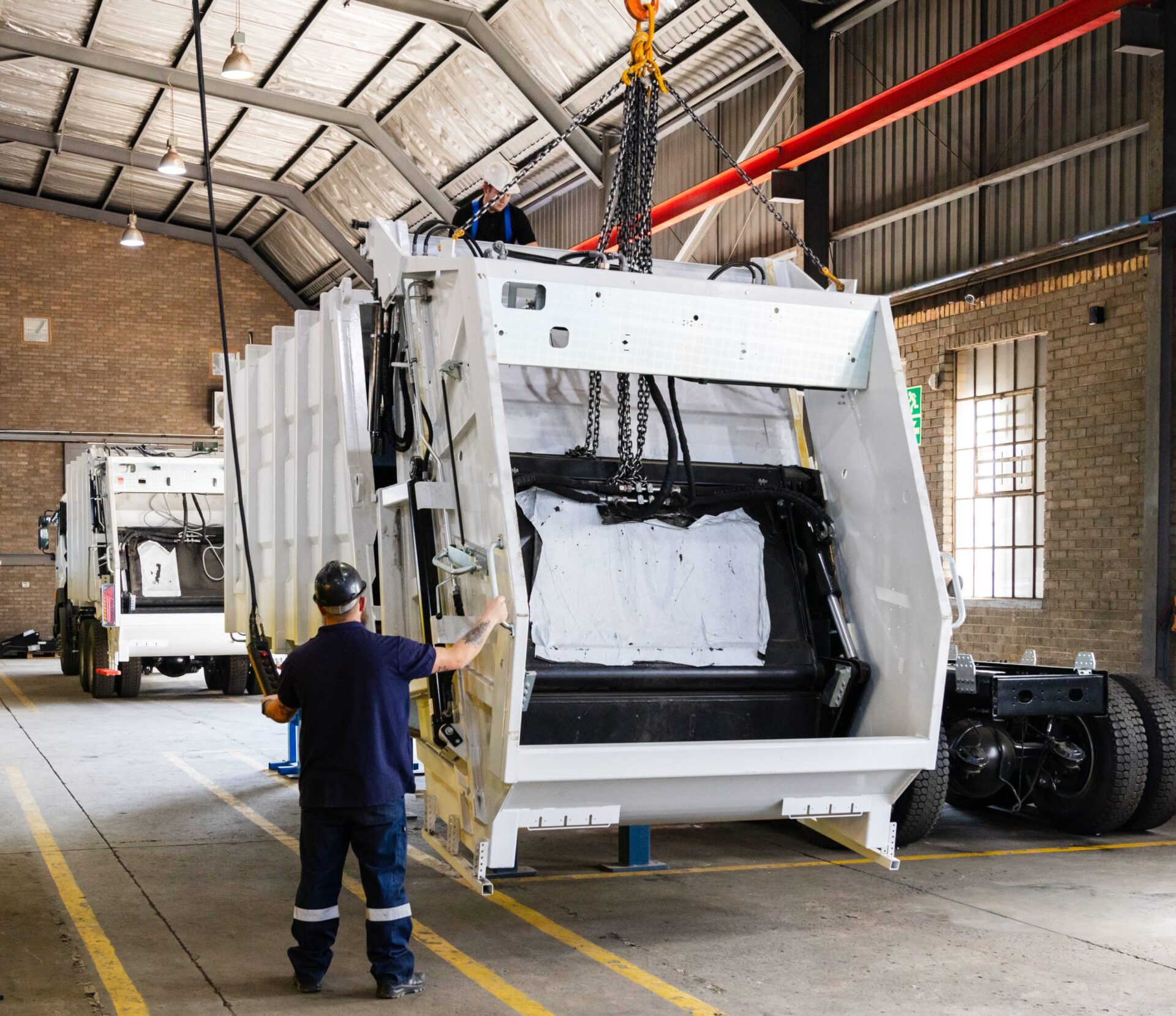
Zoeller Waste Trucks focuses on helping operators choose waste collection vehicles that are built for performance, engineered for reliability, and supported throughout their working life. Our South African operation combines proven international engineering with local manufacturing excellence, giving fleet owners and waste management professionals access to durable waste trucks designed for real-world conditions.
Below, we explain the main types of waste trucks, how they work, where they are typically used, and what to consider when selecting the right vehicle for your fleet.
What Are Waste Trucks?
Waste trucks are specialised vehicles designed to collect, transport, compact, lift, tip, or transfer waste from one location to another. They may be used by municipalities, private waste contractors, industrial facilities, commercial property owners, construction companies, recycling operators, and environmental service providers.
The term “waste trucks” can refer to a broad range of vehicles, including:
- Rear loader compactor trucks
- Front loader waste trucks
- Side loader waste trucks
- Skip loader trucks
- Hook lift and roll-on-roll-off trucks
- Tipper trucks
- Recycling collection trucks
- Organic waste trucks
- Transfer trucks
- Vacuum or liquid waste trucks
Each type is designed around a specific collection method, waste stream, container type, route profile, and operational need.
For most municipal and commercial solid waste collection routes, compactor trucks remain one of the most important categories. These vehicles compress waste inside the body of the truck, allowing operators to collect more material before travelling to a landfill, transfer station, recycling facility, or waste treatment site.
Why the Right Waste Truck Matters in South Africa
Waste collection is not simply about moving refuse from point A to point B. In South Africa, reliable waste trucks play a direct role in public health, environmental management, municipal service delivery, commercial hygiene, and operational profitability.
A well-specified waste truck can help operators:
- Complete routes faster and with fewer delays
- Reduce the number of trips to disposal sites
- Improve payload efficiency
- Lower maintenance-related downtime
- Protect staff through safer loading and operating systems
- Reduce long-term ownership costs
- Extend vehicle life through durable design and service support
- Maintain consistent service delivery in demanding environments
For private waste contractors, the right truck can influence profitability. For municipalities, it can affect service reliability and public satisfaction. For industrial and commercial clients, it can support cleaner, safer, and more compliant waste handling.
When investing in waste trucks, the lowest upfront price is rarely the best measure of value. The more important questions are: How long will the truck perform reliably? How often will it be off the road? How efficient is the compaction system? Are the hydraulic systems durable? Is after-sales support available? Can the truck be maintained properly over its full lifecycle?
These questions are central to how we approach waste truck manufacturing, rental, leasing, service, and fleet support.
Rear Loader Compactor Trucks
Rear loader compactor trucks are among the most widely used waste trucks for municipal and commercial refuse collection. As the name suggests, waste is loaded into the rear of the vehicle, either manually or through a bin-lifting mechanism. The truck then compacts the waste inside the body, helping maximise load capacity.
Rear loaders are commonly used for:
- Household refuse collection
- Municipal kerbside collection
- Business waste collection
- General solid waste routes
- Residential estates
- Schools, hospitals, and commercial properties
- Areas where bins are manually presented for collection
The main advantage of rear loader compactor trucks is their versatility. They can operate in varied route conditions, manage different bin sizes, and handle mixed general waste efficiently. For South African operators working across both urban and suburban routes, this flexibility is a major advantage.
Rear loaders are also practical where collection teams need to move between many stops in a single route. A reliable compaction system allows more waste to be collected before the truck needs to unload, reducing time spent travelling to disposal or transfer facilities.
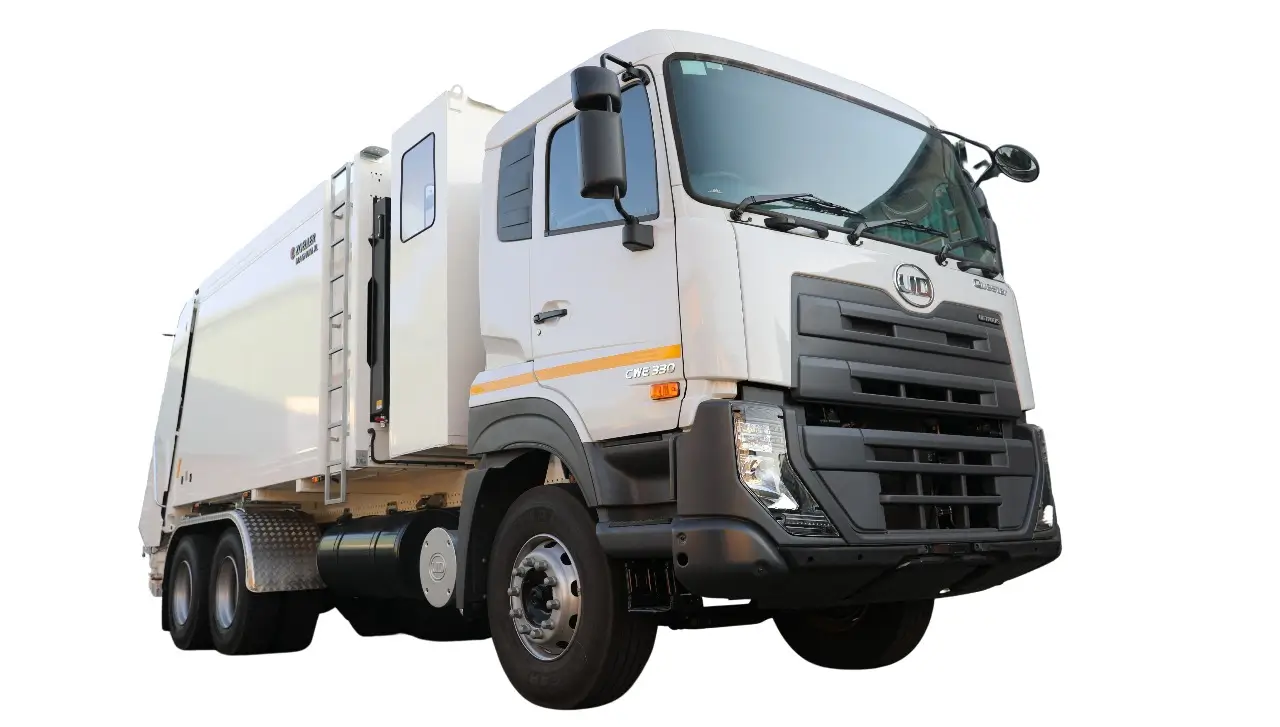
Our Magnum XL is designed for operators who need high-performance waste compactors that can withstand demanding operating conditions. Built with certified materials and components, the Magnum XL has been developed for durability, efficiency, safety, and long-term value. Its advanced compaction system is engineered to improve carrying capacity, reduce downtime, and support dependable daily operations.
Front Loader Waste Trucks
Front loader waste trucks are designed to lift large commercial waste containers from the front of the vehicle. The truck uses hydraulic arms to pick up a container, lift it over the cab, and empty the contents into the body.
These waste trucks are typically used for:
- Shopping centres
- Large commercial properties
- Office parks
- Industrial parks
- Warehouses
- Hotels
- Large-volume business waste collection
Front loader trucks are effective when clients use large stationary containers and generate high volumes of waste. Because the containers are mechanically lifted, they reduce the need for manual handling and can speed up collection at high-volume sites.
However, front loaders require suitable access, sufficient turning space, and compatible containers. They are often more appropriate for planned commercial routes than narrow residential streets or informal collection environments.
For South African waste operators, front loaders can be useful where routes include large businesses or industrial clients that require scheduled bulk collection. The key consideration is whether the vehicle, container system, and route layout match the collection environment.
Side Loader Waste Trucks
Side loader waste trucks collect bins from the side of the vehicle. Some are manually loaded by collection crews, while others are automated and use a mechanical arm to lift and empty wheelie bins.
Side loaders are often used for:
- Residential collection
- Suburban municipal routes
- Areas with standardised wheelie bins
- Routes where one-sided collection is practical
- Operations aiming to reduce manual lifting
Automated side loaders can improve efficiency by reducing the number of crew members required and limiting repetitive manual handling. This can improve safety and productivity, especially on routes where bins are consistently positioned and easily accessible.
However, side loaders depend heavily on route discipline. Bins need to be placed correctly, streets must allow side access, and parked vehicles or roadside obstacles can slow collection. In South Africa, where collection conditions can vary significantly from one area to another, side loaders may be well suited to some routes but less practical in others.
Before investing in a side loader, operators should assess bin standardisation, route width, traffic patterns, kerbside access, and crew requirements.
Skip Loader Trucks
Skip loader trucks are used to transport open-top skips, which are commonly found on construction sites, renovation projects, garden waste sites, industrial yards, and commercial clean-up projects.
Skip loaders are often used for:
- Construction rubble
- Garden refuse
- Renovation waste
- Industrial clean-up waste
- Bulky non-compactable material
- Temporary waste containers
Unlike compactor trucks, skip loaders usually do not compact waste. Their role is to deliver an empty skip, collect it once full, and transport it to an appropriate disposal, recycling, or processing facility.
Skip loader trucks are valuable for businesses that need flexible, temporary waste storage. In South Africa, they are frequently used in building, demolition, landscaping, and facilities management.
The main limitation is load type. Skips are excellent for bulky or heavy materials, but they are not always the most efficient option for general domestic or commercial refuse that could be compacted.
Hook Lift and Roll-On-Roll-Off Trucks
Hook lift and roll-on-roll-off waste trucks are designed to transport large containers that are pulled onto the truck chassis using a hydraulic hook or hoist system. These trucks are often used where high-volume waste needs to be moved efficiently.
They are suitable for:
- Transfer stations
- Large industrial sites
- Recycling facilities
- Construction and demolition waste
- Bulk commercial waste
- Municipal drop-off sites
- Large-scale waste handling operations
Hook lift systems are flexible because one truck can move multiple container types, depending on the body and container configuration. This makes them useful for operators that handle different waste streams or service multiple sites.
Roll-on-roll-off trucks are particularly effective for large-volume collection where compaction may happen separately or where the waste type does not suit a standard compactor truck.
For South African operators, these trucks can support regional waste movement, especially where waste needs to be transported from collection points to transfer stations or landfill sites over longer distances.
Tipper Waste Trucks
Tipper trucks are general-purpose vehicles used to transport loose waste or material that can be tipped out of the load body. They are common in construction, landscaping, municipal maintenance, and clean-up operations.
Tipper waste trucks are often used for:
- Garden waste
- Sand, soil, and rubble
- Illegal dumping clean-ups
- Municipal maintenance waste
- Roadside debris
- Non-compactable loads
Tipper trucks are not usually ideal for household refuse because they do not compact waste and may not contain lighter material as securely as enclosed waste trucks. However, they are practical for specific waste streams where the load is heavy, loose, and suitable for tipping.
In South Africa, tippers are often used alongside other waste trucks as part of a broader fleet. They can support once-off clean-ups, site clearing, and municipal response work where a compactor truck would not be the best choice.
Recycling Collection Trucks
Recycling trucks are designed to collect separated recyclable materials such as paper, cardboard, plastics, metals, and glass. Some recycling trucks have separate compartments, while others collect single-stream recycling for sorting at a materials recovery facility.
They are commonly used for:
- Kerbside recycling
- Commercial recycling collection
- Office recycling
- Retail and packaging waste
- Cardboard collection
- Schools and institutions
- Recycling drop-off programmes
The design of a recycling truck depends on how materials are collected. If recyclables are separated at source, compartmentalised bodies can help keep streams separate. If recyclables are mixed, the truck may focus on volume and ease of unloading.
Recycling collection requires careful planning because recyclable materials can be bulky but relatively light. Cardboard, for example, takes up space quickly. A well-planned collection system helps reduce unnecessary trips and supports more efficient recycling operations.
For waste operators in South Africa, recycling trucks can form part of a broader sustainability strategy, especially for clients looking to reduce landfill disposal and improve environmental performance.
Organic Waste Trucks
Organic waste trucks are used for food waste, garden waste, agricultural organic material, and other biodegradable waste streams. These vehicles may be designed to reduce leakage, odour, and contamination, depending on the application.
Organic waste trucks may be used for:
- Food waste collection
- Garden refuse
- Composting operations
- Agricultural waste
- Hospitality and restaurant waste
- Municipal green waste programmes
Organic material can be heavy, wet, and odorous, so vehicle selection matters. Operators need to consider sealing, wash-down requirements, corrosion resistance, and route frequency.
In South Africa, organic waste collection is becoming more relevant as businesses, municipalities, and communities look for alternatives to landfill disposal. Composting, biogas, and organic waste diversion programmes can all require dedicated collection vehicles.
Transfer Waste Trucks
Transfer trucks are used to move larger volumes of waste from one facility to another. They are not usually used for kerbside collection. Instead, they support the movement of waste from transfer stations to landfills, recycling facilities, or treatment plants.
Transfer trucks are suitable for:
- Long-distance waste transport
- Bulk movement from transfer stations
- Regional waste logistics
- Large municipal operations
- High-volume private waste companies
The benefit of transfer trucks is efficiency. Smaller collection vehicles can complete local routes and unload at a transfer station, while larger transfer vehicles move bulk waste over longer distances. This can reduce fuel usage, improve route productivity, and keep collection trucks focused on collection work instead of long-haul transport.
For South African municipalities and regional waste operators, transfer systems can make sense where disposal sites are far from collection areas.
Vacuum and Liquid Waste Trucks
Vacuum trucks are specialised vehicles designed to collect liquids, sludge, sewage, and other wet waste streams. They use a vacuum system to suction material into a tank.
They are often used for:
- Septic tank cleaning
- Sewer and drain maintenance
- Industrial sludge
- Liquid waste removal
- Spill response
- Grease trap cleaning
- Wastewater-related services
These trucks are highly specialised and must be selected according to waste type, tank capacity, pump performance, safety requirements, and regulatory obligations. They are not general refuse collection vehicles, but they play an important role in broader waste and sanitation services.
Choosing the Right Waste Truck for Your Operation
Selecting the right waste truck starts with understanding the job it needs to do. A vehicle that performs well on one route may be inefficient on another. Before investing in waste trucks, operators should assess the full operational picture.
Important questions include:
- What type of waste will be collected?
- Is the waste compactable, bulky, wet, abrasive, or heavy?
- Will the truck collect from bins, skips, containers, bags, or loose waste?
- What route distances will the truck travel each day?
- Are the roads narrow, congested, steep, or uneven?
- How many stops are required per route?
- What payload and body capacity are needed?
- What chassis options are suitable?
- What level of maintenance support is available?
- Is outright purchase, leasing, or rental the best financial option?
For general municipal and commercial refuse collection, waste compactor trucks often provide the most practical balance of capacity, efficiency, and route productivity. A strong compaction system allows operators to collect more waste per trip, while durable construction helps the truck withstand the realities of daily collection work.
This is where the quality of engineering becomes critical. A compactor truck is not just a body fitted to a chassis. It is a working system that depends on structural strength, hydraulic performance, operator safety, corrosion resistance, reliable lifting, and ongoing service support.
The Zoeller Magnum XL: Built for Demanding Waste Collection
The Magnum XL has been developed for operators who need dependable waste trucks that can perform in demanding waste collection environments. As a locally manufactured compactor built with certified materials and components, it is designed to support long-term durability and operational confidence.
The Magnum XL offers:
- Advanced compaction performance
- Durable construction for demanding routes
- Galvanised hydraulic pipes, fittings, fasteners, and handles
- Strong resistance to corrosion
- A design focused on efficiency and reduced downtime
- Long-term value for fleet operators
- Safety-focused engineering
- Support through service and maintenance solutions
For municipalities and private waste contractors, this combination of durability, performance, and after-sales support is essential. A waste truck that spends too much time in the workshop affects every part of an operation: route planning, staffing, customer service, contract delivery, and profitability.
Our approach is built around reducing that risk. We provide waste trucks that are engineered for reliable service, and we support them with maintenance solutions that help preserve structural integrity, optimise hydraulic performance, and extend equipment life.
Chassis Flexibility for South African Fleets
Waste trucks must be matched to suitable chassis platforms. The right chassis affects payload, manoeuvrability, driver comfort, fuel efficiency, maintenance planning, and long-term fleet consistency.
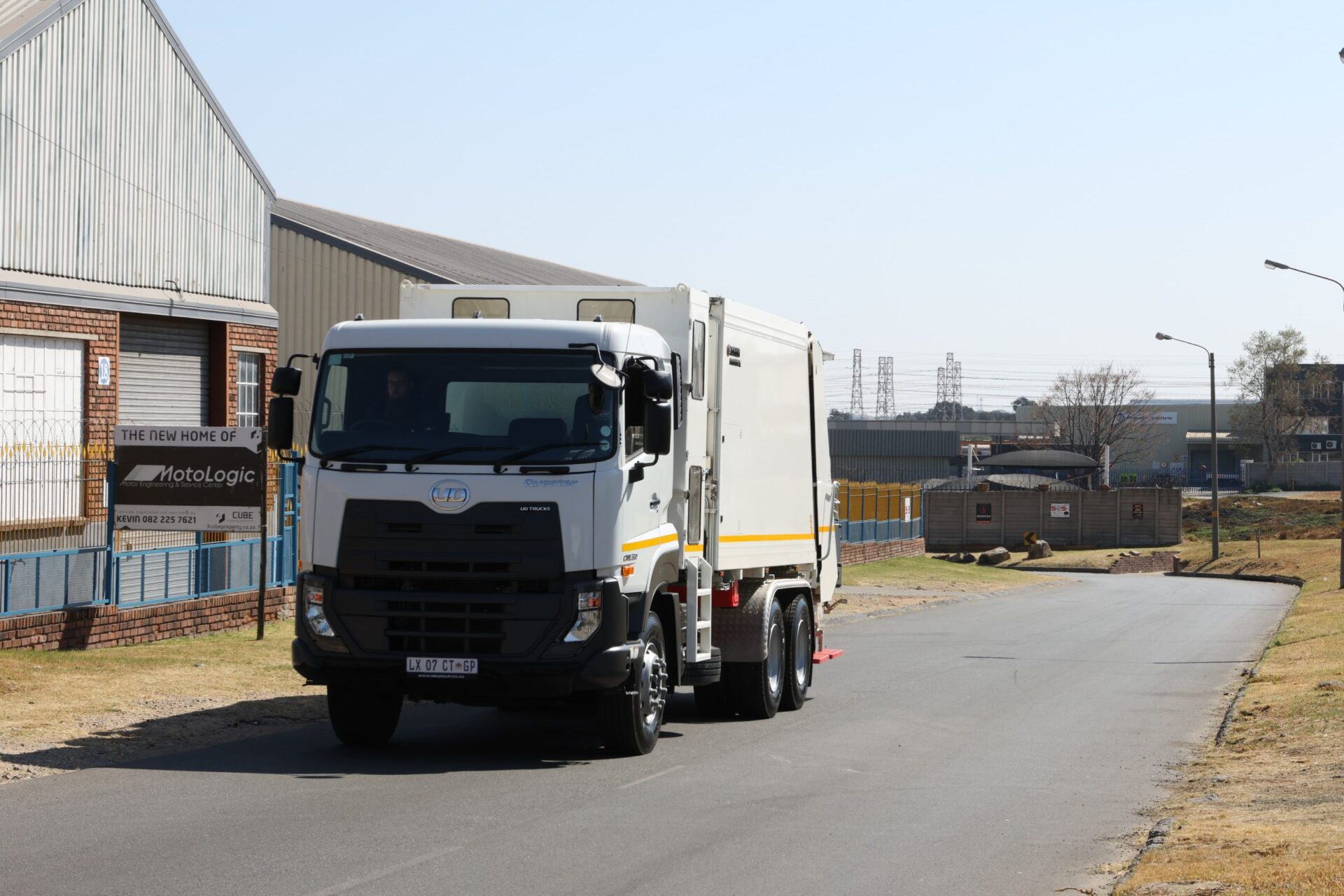
We offer truck chassis options that include respected commercial vehicle brands such as Mercedes-Benz, Isuzu, UD Trucks, and FUSO. This gives operators flexibility when aligning new waste trucks with existing fleet preferences, maintenance capabilities, and operational requirements.
Chassis selection should consider:
- Route type and terrain
- Load expectations
- Driver requirements
- Parts availability
- Fleet standardisation
- Service network access
- Total cost of ownership
- Long-term operational plans
A good waste truck specification is never one-size-fits-all. It should be built around the operator’s actual working conditions.
Purchase, Lease, or Rent? Choosing the Right Ownership Model
Not every business or municipality needs to buy waste trucks outright. Different financial and operational situations call for different ownership models.
- Outright Purchase: An outright purchase is often suitable for operators with long-term contracts, established routes, and the capital budget to invest in fleet assets. It provides full ownership and control over the vehicle.
- Leasing: Leasing can support fleet expansion without the same upfront capital pressure as outright purchase. It may suit operators that need dependable vehicles while managing cash flow and contract growth.
- Waste Truck Rental: Rental is a flexible option for short-term needs, seasonal demand, interim fleet support, breakdown cover, or testing new routes. With Zoeller Waste Trucks, rental solutions give operators access to reliable compactors without the burden of long-term ownership. Rental can also reduce business risk when contract conditions change or when operators need extra capacity quickly.
This flexibility is especially valuable in South Africa’s waste management sector, where contract cycles, municipal demands, and private-sector service requirements can change quickly.
Why Maintenance Support Is as Important as the Truck Itself
A waste truck is a high-use asset. It works under pressure, carries heavy loads, operates hydraulic systems repeatedly, and often runs daily routes in challenging conditions. Without the right maintenance support, even a good vehicle can suffer from preventable downtime.
Effective maintenance helps protect:
- Hydraulic systems
- Compaction performance
- Structural components
- Bin lifters and moving parts
- Safety systems
- Corrosion-prone areas
- Long-term asset value
Our service and maintenance solutions are designed to keep compactors and waste collection trucks performing at their best. Our structured approach helps operators reduce downtime, manage repair risk, and extend equipment life.
For fleet owners, this matters because downtime is never just a mechanical inconvenience. It can lead to missed collections, unhappy clients, overtime costs, emergency vehicle hire, and reputational damage. A reliable maintenance partner helps protect the full operation.
Key Features to Look for in Quality Waste Trucks
When comparing waste trucks, operators should look beyond surface appearance and initial price. A strong specification can make a major difference over the truck’s working life.
Important features include:
- Durable materials: Waste collection is abrasive and demanding. High-wear areas need strong materials that can handle repeated loading, compaction, and discharge.
- Efficient compaction: Good compaction improves carrying capacity and reduces trips to disposal sites. This can support route efficiency and help manage fuel and labour costs.
- Reliable hydraulics: Hydraulic systems power the lifting and compaction functions. Poor hydraulic design or low-quality components can lead to downtime and expensive repairs.
- Corrosion resistance: Waste collection environments expose trucks to moisture, chemicals, organic material, and harsh operating conditions. Corrosion-resistant components help extend vehicle life.
- Safety systems: Waste trucks operate around crews, pedestrians, traffic, bins, and moving mechanisms. Safety features, warning systems, emergency stops, signage, and step monitoring all contribute to safer operations.
- Ease of maintenance: A truck that is easier to inspect, service, and repair can reduce downtime and improve long-term operating efficiency.
- After-sales support: The relationship with the manufacturer should not end when the truck is delivered. Ongoing support is essential for protecting performance and value.
Matching Waste Trucks to Real-World South African Applications
Different sectors need different waste truck solutions. A municipality collecting household waste across multiple suburbs has different needs from a construction company moving rubble or a private contractor servicing commercial bins.
- Municipal waste collection: Municipalities need dependable compactor trucks that can manage daily routes, mixed residential waste, and demanding public service expectations. Reliability and service support are crucial.
- Private waste contractors: Private operators need waste trucks that protect profitability. Payload efficiency, low downtime, flexible finance options, and strong after-sales support can directly affect contract performance.
- Commercial and retail waste: Shopping centres, office parks, and retail sites may need scheduled waste collection using compactor trucks, front loaders, or other container-based systems, depending on volume.
- Industrial waste handling: Industrial sites may require specialised vehicles depending on the waste stream. Heavy-duty performance, safety, and compliance are key considerations.
- Construction and demolition waste: Skip loaders, hook lift trucks, roll-on-roll-off vehicles, and tippers are often more suitable for rubble, site waste, and bulky non-compactable material.
- Recycling operations: Recycling fleets may need vehicles that support material separation, high-volume cardboard collection, or efficient movement to sorting facilities.
Common Mistakes When Choosing Waste Trucks
Choosing waste trucks is a major investment, and mistakes can be expensive. Some of the most common errors include:
- Selecting a truck based only on the upfront price
- Ignoring route conditions
- Underestimating waste volume
- Choosing the wrong body type for the waste stream
- Overlooking maintenance requirements
- Failing to consider payload and compaction efficiency
- Buying without proper after-sales support
- Not matching the body to the right chassis
- Ignoring operator safety and ease of use
- Treating all waste trucks as if they perform the same job
A better approach is to look at total lifecycle value. The right waste truck should support productivity, reduce downtime, improve route performance, and remain reliable over years of operation.
Why Zoeller Waste Trucks Is a Strong Choice for South African Operators
We understand the pressure placed on waste collection fleets. Operators need vehicles that are ready for tough daily use, supported by experienced teams, and built with long-term performance in mind.
We bring together:
- Proven international engineering
- Local South African manufacturing
- Durable compactor truck design
- The high-performance Magnum XL range
- Flexible rental, leasing, and purchase options
- Reliable service and maintenance support
- Chassis flexibility for different fleet needs
- A focus on low cost of ownership
- Practical support for municipalities and private operators
We do not believe waste trucks should be treated as short-term purchases. They are long-term operational assets. When they are well designed, properly supported, and correctly specified, they help operators deliver cleaner communities, better service, and more efficient waste management.
FAQs About Waste Trucks
What are waste trucks used for?
Waste trucks are used to collect, transport, compact, lift, tip, or transfer different types of waste. They are commonly used for household refuse, commercial waste, industrial waste, recycling, garden waste, construction rubble, and bulk waste movement.
What is the most common type of waste truck?
One of the most common types of waste trucks is the rear loader compactor truck. It is widely used for municipal and commercial refuse collection because it is versatile, efficient, and suitable for many route types.
What is a waste compactor truck?
A waste compactor truck is a specialised waste collection vehicle that compresses waste inside the truck body. This allows the truck to carry more waste before unloading, which can improve route efficiency and reduce trips to disposal sites.
What type of waste truck is best for municipal collection?
For general municipal refuse collection, rear loader compactor trucks are often a practical choice. They can collect household waste, support high-volume routes, and operate across a wide range of residential and commercial environments.
What is the difference between a compactor truck and a skip loader?
A compactor truck compresses waste inside the body, making it suitable for general refuse collection. A skip loader collects and transports open-top skips, which are commonly used for construction rubble, garden waste, and bulky waste.
Are waste trucks suitable for recycling collection?
Yes. Some waste trucks are designed specifically for recycling collection, while others can be adapted for certain recyclable materials. The best option depends on whether the recycling is collected as a single stream or separated into different material types.
Should I buy, lease, or rent a waste truck?
The best option depends on your budget, contract length, operational needs, and fleet strategy. Buying may suit long-term use, leasing can support fleet growth with less upfront capital pressure, and rental is useful for short-term contracts, seasonal demand, downtime cover, or testing new routes.
What should I consider before choosing waste trucks?
Consider the waste type, route distance, road conditions, payload requirements, compaction needs, chassis options, maintenance support, safety features, and total cost of ownership. The right truck should match your actual working environment.
Why is after-sales support important for waste trucks?
Waste trucks work in demanding conditions and rely on hydraulic, structural, and mechanical systems. Strong after-sales support helps reduce downtime, extend equipment life, maintain safety, and protect long-term fleet value.
What makes Zoeller Waste Trucks different?
Zoeller Waste Trucks offers durable, locally manufactured compactor trucks supported by proven engineering, flexible ownership options, and service and maintenance solutions. Our focus is on reliable performance, low downtime, and long-term value for South African waste management operators.
Choose Waste Trucks Built for Performance, Reliability, and Long-Term Value
The best waste trucks are not simply the ones that look strong on delivery day. They are the ones that continue to perform after thousands of collections, demanding routes, heavy loads, and repeated compaction cycles.
Whether you are expanding your fleet, replacing ageing vehicles, supporting a new contract, or looking for a flexible rental solution, Zoeller Waste Trucks can help you choose a waste truck solution that fits your operational and financial needs.
Our Magnum XL compactor trucks are built for demanding waste collection environments and supported by a team that understands the importance of uptime, safety, and long-term value.
Speak to us today to explore our waste trucks, schedule a trial, discuss rental or leasing options, or find the right compactor solution for your fleet.